Polygene betekenis in het engels
Define polygene. polygene synonyms, polygene pronunciation, polygene translation, English dictionary definition of polygene. n. Any of a group of nonallelic genes, each having a small quantitative effect, that together produce a wide range of phenotypic variation. Contextual translation of "polygene" into English. Human translations with examples: MyMemory, World's Largest Translation Memory. 
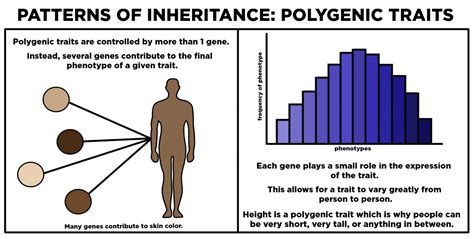
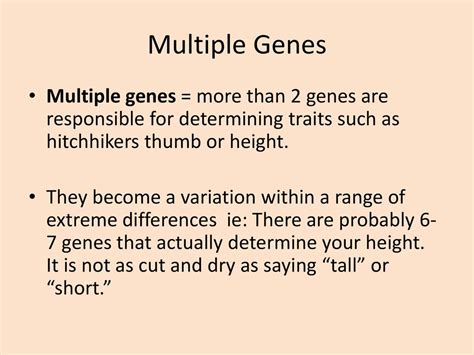
Multiple genes A polygene is a member of a group of non-epistatic genes that interact additively to influence a phenotypic trait, thus contributing to multiple-gene inheritance (polygenic inheritance, multigenic inheritance, quantitative inheritance [1]), a type of non-Mendelian inheritance, as opposed to single-gene inheritance, which is the core notion of Mendelian inheritance.
Polygene betekenis in het engels What does polygene mean? Information and translations of polygene in the most comprehensive dictionary definitions resource on the. Login. The STANDS4 Network.
Polygenic traits
Polygenic traits are traits that are controlled by multiple genes and show continuous variation. Learn how polygenic traits differ from Mendelian traits, and see examples of polygenic traits such as height, skin color, and eye color. A polygenic trait is a characteristic influenced by two or more genes, such as height or skin color. Learn how polygenic traits are inherited, how they differ from Mendelian traits, and how they are related to health conditions. Polygenic traits Polygenic inheritance is the type of inheritance controlled by more than one gene where the dominant alleles have a cumulative effect on a phenotypic trait. Learn about the characteristics, examples, and environmental effects of polygenic inheritance in humans and plants.Multiple genes
Learn what multiple alleles are, how they differ from other types of genetic diversity, and how they affect phenotypes. Explore examples of multiple alleles in plants, animals, and humans, and their implications for natural selection and disease. Multiple genes can contribute to the expression of a phenotype, and the regulation of these genes plays a crucial role in controlling phenotypic expression. The regulation of gene expression involves a complex network of interactions, where various factors and mechanisms influence when and to what extent a gene is activated or repressed.Genetic inheritance
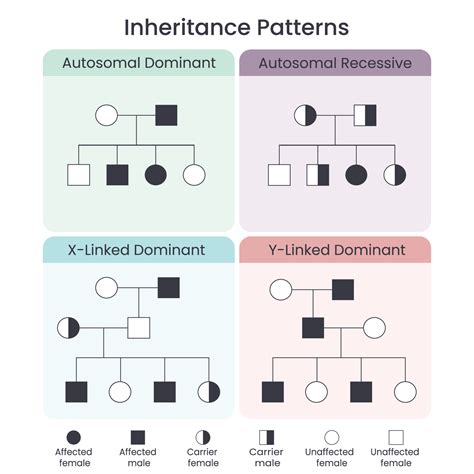
Learn how characteristics are passed from one generation to the next due to DNA and alleles. Explore the laws of inheritance by Gregor Mendel and the concepts of genotype and phenotype. Through genetic inheritance, individuals can inherit a unique combination of alleles, resulting in variations in physical appearance, behavior, and susceptibility to certain diseases. Understanding genetic inheritance is crucial for comprehending the complexity of human diversity and the factors that contribute to it. Genetic inheritance Several basic modes of inheritance exist for single-gene disorders: autosomal dominant, autosomal recessive, X-linked dominant, and X-linked recessive. However, not all genetic conditions will follow these patterns, and other rare forms of inheritance such as mitochondrial inheritance exist. (See table at the end of this section.).Complex traits
Complex traits are also known as polygenic traits and multigenic traits. [1] [2] The existence of complex traits, which are far more common than Mendelian traits, represented a significant challenge to the acceptance of Mendel's work. Modern understanding has 3 categories of complex traits: quantitative, meristic, and threshold. These traits. Genes involved in complex traits may have redundant enhancers that buffer the impact of genetic variants on gene expression levels, making those eQTLs that are relevant to complex traits more difficult to identify. Along similar lines, features of eQTL mapping may favor discovery of loci and genes with lower selective constraint, regulatory.Complex traits Unlike monogenic traits, complex trait variation is not entirely explained by one or a small number of genes but results from a complex mixture of inherited and environmental factors. The proportion of phenotypic variation explained by inherited genetic factors is known as the heritability [ 1 ], and this measures the degree of resemblance.